

Fit and tailoring
Your first suit: what to check
Shoulders first, then everything else. What has to fit on the day you buy it, what a tailor can change, and what to wear with it.
A first suit has a lot to do. It goes to interviews, graduations, weddings and funerals, often in the same year. It doesn’t need to be expensive. It needs to fit, and most of fit comes down to a few checks you can make in front of a mirror.
Start with the shoulders
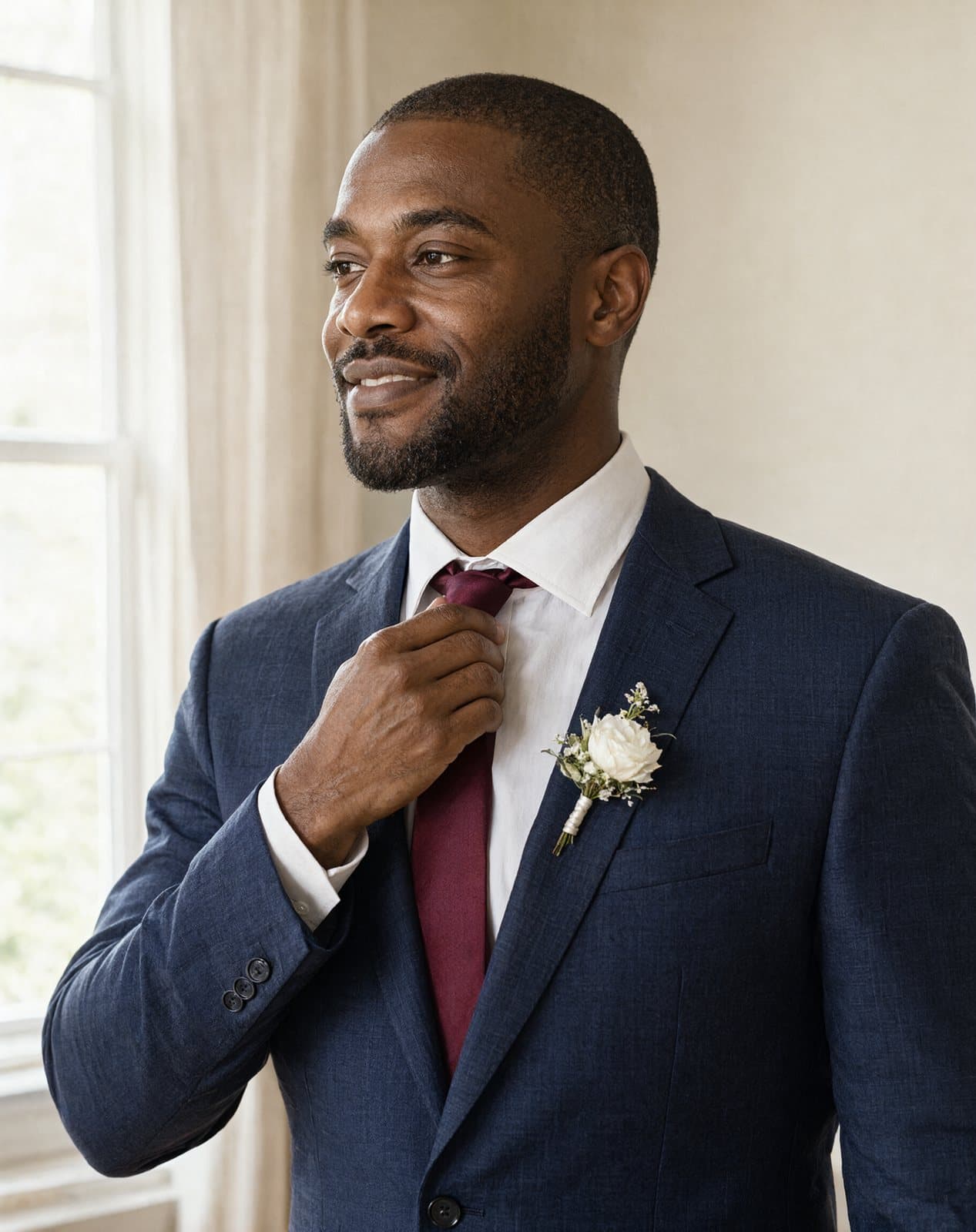
The seam at the top of the sleeve should sit where your shoulder ends. If it hangs past that point, the jacket is too big. If the cloth pulls or dents just below the seam, it is too small.
Get this right before anything else. A tailor can shorten a sleeve or take in a waist. Shoulders are another matter: rebuilding them is difficult and expensive, and rarely worth it.
If you own a jacket that fits, lay it flat, measure straight across the back from one shoulder seam to the other, and compare that number with the shoulder measurement on the product page.
Then the chest and the button
Fasten the top button and leave the bottom one undone. The lapels should lie flat against your chest. If the cloth pulls into an X around the button, the jacket is too tight. You should be able to slide a flat hand between the jacket and your shirt without forcing it.
Jacket length and sleeves
A jacket should cover most of your seat. A slim cut is a little shorter than a classic one, and both are right.
With your arms at your sides, the jacket sleeve should end at your wrist bone, so a little shirt cuff shows below it. If the sleeve covers your shirt cuff completely, it is too long. This is one of the simplest jobs a tailor does.
The trousers
The waistband should stay up without a belt and should not pinch when you sit down. The seat should lie smooth, neither tight nor loose.
The hem should rest lightly on the top of your shoe. Our suit trousers come in five inseams, from 28 to 36, so many men won’t need them altered. If you do, hemming is the easiest alteration there is.
Why the halves are sold separately
Plenty of men are one size on top and another below. A suit sold as a set makes them choose which half to get wrong.
Ours are sold as separates: the jacket by chest and length, the trousers by waist and inseam, in the same cloth. The Essential Stretch Suit is the one we priced as a first suit.
Navy or charcoal first
Both go everywhere a suit goes. Either one works for an interview, a wedding, a funeral and an office, in daylight and in the evening. Leave black, and anything with a strong pattern, for a second or third suit.
What to wear with it
- A white dress shirt. Add light blue when you want a second one.
- One plain or quietly patterned silk tie.
- Dark leather lace-up shoes, and a belt in the same color as the shoes.
- Dark socks that reach the middle of your calf, so no skin shows when you sit.
What a tailor can and can’t do
A local tailor can make a good suit fit better. It helps to know what is worth asking for.
- Easy: hemming trousers, shortening sleeves, taking in the waist of a jacket or a pair of trousers.
- Possible, within limits: letting a waist or a seat out. It depends on how much spare cloth is in the seams.
- Not worth it: changing the shoulders, or making a jacket longer.
So buy the size that fits your shoulders and your seat, and have the rest adjusted.
Before you order
Every size on our product pages lists the garment’s own measurements. Compare them with a jacket and a pair of trousers that fit you now. If you don’t own any, measure yourself and write the numbers down.
Exchanges are free, so a wrong size can be swapped. Order with enough time to do that before the day you need the suit.
For the rest of a first working wardrobe, see First suit and first job. For what to wear to the interview itself, read What to wear to a job interview.